Source folding cartoon toy water gun for Outdoor Games, Sports, and Souvenirs
Find a selection of 30 folding cartoon toy water guns suitable for children and adults. Buyers can compare models with various animal shapes, capacities, and customization options for summer outdoor games and promotional events.
Key considerations
Products List


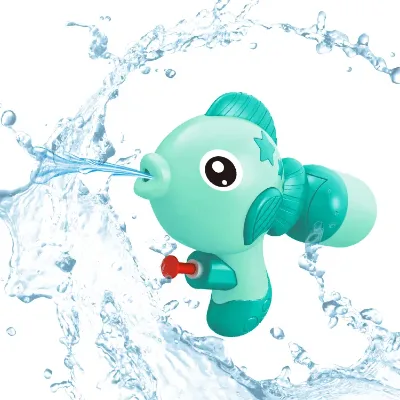


Comprehensive Sourcing Guide
Strategic Sourcing Guide for Folding Cartoon Toy Water Guns
The global market for recreational water toys has seen a sustained surge in demand, particularly for items that combine portability with engaging character designs. The specific category of folding cartoon toy water guns represents a unique intersection of functionality and novelty. These products are engineered to be compact for storage and transport while offering the visual appeal of animal or character shapes to attract younger demographics. For procurement professionals, navigating this segment requires a rigorous understanding of material composition, safety certifications, and the logistical nuances of importing from major manufacturing hubs. This guide synthesizes observed market data and technical specifications to provide a structured approach for sourcing these items effectively.
Technical Specifications and Material Composition
When evaluating folding cartoon toy water guns, the primary technical differentiator lies in the balance between structural integrity and foldability. The core material observed in this category is predominantly plastic, selected for its durability, water resistance, and ability to be molded into complex animal shapes. The supply chain data indicates a variety of specific models, each with distinct dimensional profiles that dictate their storage efficiency and water capacity.
The physical dimensions of these units vary significantly based on their intended use case. For instance, specific model configurations have been observed with standard dimensions such as 22.5226cm, 27206.5cm, and larger variants reaching 42369.5cm. These measurements are critical for logistics planning, as they determine the volume of cargo required per unit. The water capacity is another vital specification, with observed units featuring a capacity of 750ml, which is sufficient for extended play sessions without requiring frequent refills.
The folding mechanism is a key design feature. While the specific mechanical engineering details are proprietary to individual manufacturers, the product attributes confirm that these toys are designed to be compact, often utilizing a "Wind Spring" type action or similar mechanical systems to propel water. The structural outline is consistently described as a "Gun" shape, often customized to resemble specific animals such as giraffes, ducks, pelicans, elephants, dogs, or sheep. This customization extends to the color palette, with common offerings including combinations of yellow, orange, green, red, blue, and various shades of green and blue. Buyers must verify that the folding joints maintain structural integrity after repeated use, as plastic fatigue can be a failure point in lower-quality units.
Compliance and Certification Verification
Safety compliance is non-negotiable in the toy industry, especially for products intended for children. The observed data highlights a range of certifications that suppliers may possess, though buyers must verify the current validity of these documents for specific production batches. The most frequently cited certifications in the market data include EN71, CE, and ASTM standards.
The EN71 standard is a critical European safety requirement for toys, covering mechanical safety, flammability, and chemical migration. Similarly, the CE marking indicates conformity with health, safety, and environmental protection standards for products sold within the European Economic Area. The ASTM standard is the primary reference for toy safety in the United States. It is important to note that while the data lists these certifications, they are not universally applied to every single SKU. For example, some models are explicitly noted with "ENCE" or "ENASTM, CE" markings, while others may rely on general compliance statements.
Buyers must request specific test reports from suppliers to confirm that the plastic materials used are free from harmful substances like phthalates and heavy metals. The age grading is another critical compliance factor. The market data shows a split in target demographics: some models are designated for children aged 3-8 years, while others are suitable for ages greater than 8 years. This distinction is vital for labeling and regulatory compliance, as toys for younger children undergo stricter scrutiny regarding small parts and choking hazards. The "Animal Shape" and "Model Toy" attributes must align with the age recommendations to ensure that no small detachable parts pose a risk to the intended user group.
Cost Drivers and Pricing Dynamics
Understanding the cost structure of folding cartoon toy water guns requires an analysis of several variables. The observed price range in the market spans from $0.28 to $7.00 USD per unit. This wide variance is driven by differences in material quality, production complexity, and the extent of customization.
The primary cost driver is the complexity of the molding process. Units featuring intricate animal shapes, such as a detailed giraffe or pelican, require more complex molds and potentially higher-grade plastics to ensure the folding mechanism does not compromise the structural integrity of the character features. Additionally, the volume of the water tank and the durability of the spring mechanism contribute to the unit cost.
Customization is a significant factor in pricing. The data confirms that customization is available, including options for logo printing via pad print or logo stickers. Full-color printing capabilities allow for vibrant, brand-specific designs, which naturally command a higher price point than standard, unbranded units. The packaging method also influences cost; options range from simple card bags to more elaborate PVC card head bags and PDQ (Pre-Pack Display Quantity) units. More sophisticated packaging increases the unit cost but can reduce downstream handling expenses for the buyer.
Minimum Order Quantities (MOQs) are another critical cost component. The observed MOQ range is between 30 and 1260 units. Lower MOQs, such as 30 units, are typically associated with standard models or sample orders, while larger orders of 1260 units often unlock better per-unit pricing. Buyers should be aware that the "Sample Time" for these products is typically 3 to 7 days, which can impact the overall timeline for product development and initial inventory stocking.
Typical Applications and Usage Scenarios
The versatility of folding cartoon toy water guns makes them suitable for a diverse range of applications. The primary usage scenario is outdoor games, particularly during the summer season. The product attributes explicitly list "out Door Game" and "Battle Game" as key environments, indicating that these toys are designed for active play in parks, beaches, and backyards.
Beyond recreational use, these items serve as effective promotional and souvenir tools. The "Funny," "Particular Toys," "Odd Toys," and "Intellectual Toy" attributes suggest that they are often used as party favors, event giveaways, or corporate gifts. The ability to apply custom logos via pad print or stickers makes them ideal for brand promotion at summer festivals, sports events, and corporate team-building activities. The "Sports" and "Recreation" usage tags further reinforce their role in organized play and physical activity.
The target audience is broad, encompassing both children and adults. While the age specifications often highlight the 3-8 year and >8 year brackets, the "Suitable Croud" attribute explicitly includes "Children & Adult." This dual appeal allows buyers to market these products to a wider demographic, including family-oriented events and adult summer parties. The "Wind Spring" type mechanism ensures that the toys are not electric, making them safe for use in water environments where electrical hazards are a concern.
Supplier Evaluation and Sourcing Strategy
When selecting a supplier for folding cartoon toy water guns, buyers should prioritize manufacturers with a proven track record in plastic molding and toy safety compliance. The data indicates that the origin of these products is China, a major hub for toy manufacturing. However, the specific location of the supplier should be verified to ensure logistical efficiency and to assess the local regulatory environment.
Key evaluation criteria include the supplier's ability to provide valid certification documents for the specific models being ordered. Buyers should request copies of EN71, CE, and ASTM test reports and verify that they correspond to the exact product model numbers, such as XX217890, XX216349, or 10322566. The supplier's capacity to handle customization requests, including logo placement and color variations, is also essential. The data shows that OEM services are available, allowing buyers to create unique products that align with their brand identity.
Lead times and production capacity are critical factors. While the sample time is noted as 3-7 days, the full production lead time for large orders can vary. Buyers should inquire about the supplier's current production schedule and their ability to meet tight deadlines, especially for seasonal items like summer toys. The MOQ flexibility is another point of negotiation; suppliers may be willing to adjust quantities based on the total order value or the complexity of the customization.
Quality Control and Long-Term Procurement Considerations
Implementing a robust quality control (QC) protocol is essential to mitigate risks associated with importing plastic toys. Given the folding mechanism, QC checks should focus on the durability of the hinges and the water-tightness of the tank. Inspections should verify that the plastic does not have sharp edges and that the animal shapes are securely molded without loose parts.
For long-term procurement, buyers should consider the lifecycle of the product. The "OEM of Water Gun Toy Is Available" attribute suggests that suppliers can support ongoing production runs with consistent quality. However, buyers must establish clear specifications for materials and dimensions to ensure that future batches match the initial samples. The "Product Size" and "Standard" dimensions provided in the data should be used as baseline specifications in all purchase orders.
Sustainability is an emerging consideration in the toy industry. While the data does not explicitly mention recycled materials, buyers should inquire about the environmental impact of the plastic used and the packaging materials. The "Card Bag" and "PVC Bag" options are common, but eco-friendly alternatives may be available upon request.
Finally, buyers should maintain a relationship with their supplier to ensure a steady supply chain. The "Sample of Water Gun Toy Is Available" feature allows for pre-production testing, which is a crucial step before committing to large orders. By leveraging this capability, buyers can validate the product's performance and safety before scaling up production.
Comparative Analysis of Product Models
To assist in decision-making, the following table summarizes key differences between observed product models based on the provided data. This comparison highlights variations in dimensions, certifications, and intended age groups.
| Product Model | Standard Dimensions | Certification | Age Group | Animal Shape | Packing Type |
|---|---|---|---|---|---|
| XX217890 | 22.5226cm | ENImprint:Pad Print | > 8 Years | Giraffe, Duck, Pelican | Card Bag |
| XX216349 | 27206.5cm | ENASTM, CE | 3-8 Years | Elephant, Dog, Sheep | PVC Card Head Bag |
| XX217932 | 42369.5cm | ENCE | 3-8 Years | Not Specified | Not Specified |
| 10322566 | 48.2x19.5x10.5 | Not Specified | Not Specified | Not Specified | PDQ |
| 10344124 | 44.5x9x23cm | ENCE | Not Specified | Not Specified | PVC Bag |
This table illustrates that while the core function remains consistent, the physical attributes and compliance requirements vary by model. Buyers must select the model that best aligns with their specific market requirements, whether that be a compact size for travel, a specific age group for safety compliance, or a particular packaging style for retail display. By carefully analyzing these specifications, procurement professionals can make informed decisions that balance cost, safety, and market appeal.
FAQs
What certifications are available for these water guns?
Certifications include EN71, CE, and ASTM standards depending on the specific model. Some units are marked with ENASTM and CE, while others carry ENCE markings. Buyers must verify that test reports match the exact product model number before ordering.
Can I customize the logo on these toys?
Yes, customization is available with options for pad print and logo stickers. Full-color printing is supported to match brand requirements. The process allows for OEM services where specific designs can be applied to the plastic surface.
What is the water capacity of these folding guns?
Observed units feature a water capacity of 750ml for extended play sessions. This volume is sufficient for outdoor games without frequent refills. The capacity is integrated into the plastic body designed to hold water securely during use.
Which age groups are these toys suitable for?
These toys are designed for children aged 3-8 years and those older than 8 years. Some models are explicitly rated for ages greater than 8, while others target the younger bracket. The target crowd includes both children and adults for summer activities.
What materials are used to make these water guns?
The core material is plastic, selected for durability and water resistance. This material allows for complex animal shapes like giraffes, ducks, and elephants. The plastic construction ensures the folding mechanism remains functional during repeated use.
How do I find suppliers with specific MOQs?
Suppliers offer Minimum Order Quantities ranging from 30 to 1260 units depending on the model. Lower MOQs often apply to standard models or samples, while larger orders may unlock better pricing. Buyers should negotiate based on the specific product model selected.